

Information on Portugal
 Our professional language experts include native Portuguese speakers experienced in the nuances of the language and the requirements of effective translation. Want a quote right now? Click here.
If you prefer to first learn more about the Portuguese language and its various dialects, keep reading.
Portugal & Portuguese Language History
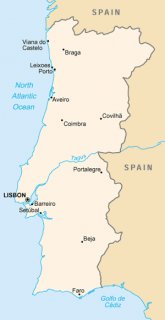
The Portuguese language, which evolved from spoken Latin, developed on the west coast of the Iberian Peninsula (now Portugal and the Spanish province of Galicia), the province the Romans called Lusitania.
When the Romans invaded the peninsula in 218 B.C., the people living in the region adopted Latin, the Roman’s language. From then until the 9th century, all spoke Romance, a language representing an intermediate stage between vulgar or common Latin and modern Latin languages.
From 409 AD to 711, the Portuguese vocabulary adopted many new words used by invading Germanic tribes. The effects of the Germanic migrations on the spoken language was not uniform and broke the linguistic uniformity of the peninsula.
Beginning in 711, when the Moors conquered the Iberian Peninsula, Arabic became the official language, although the vast majority of the population continued to speak Romance.
When Christians started to re-conquer the peninsula in the 11th century, the Arabs were expelled to the South. Galician-Portuguese became the spoken and written language of Lusitania. The separation between the Galician and Portuguese languages, which began with Portugal’s independence in 1185, was consolidated after the Moors were expelled in 1249.
Between the 14th and 16th centuries, when Portugal established an overseas empire, the Portuguese language was heard in Asia, Africa, and the Americas.
Portuguese entered its modern phase in the 16th century when early lexicologists defined Portuguese morphology and syntax. When Luis de Camões wrote Os Lusíadas, in 1572, the language was already close to its current structure of phrases and morphology. From then on, linguistic changes have been minor.
French influence during the 18th century changed the Portuguese spoken in the homeland, making it different from the Portuguese spoken in the colonies. In the 19th and 20th centuries, the Portuguese vocabulary absorbed new contributions reflecting technological advances.
Share this article
Related Posts


Latest Posts


